
A dental implants usually involves more discomfort during recovery than a conventional dental bridge because implant placement requires surgery. Your teeth may feel sensitive and your gums a little sore after bridge treatment. For both bridge and implant treatment in Antalya, your dentist numbs the area first to prevent pain during the procedure.
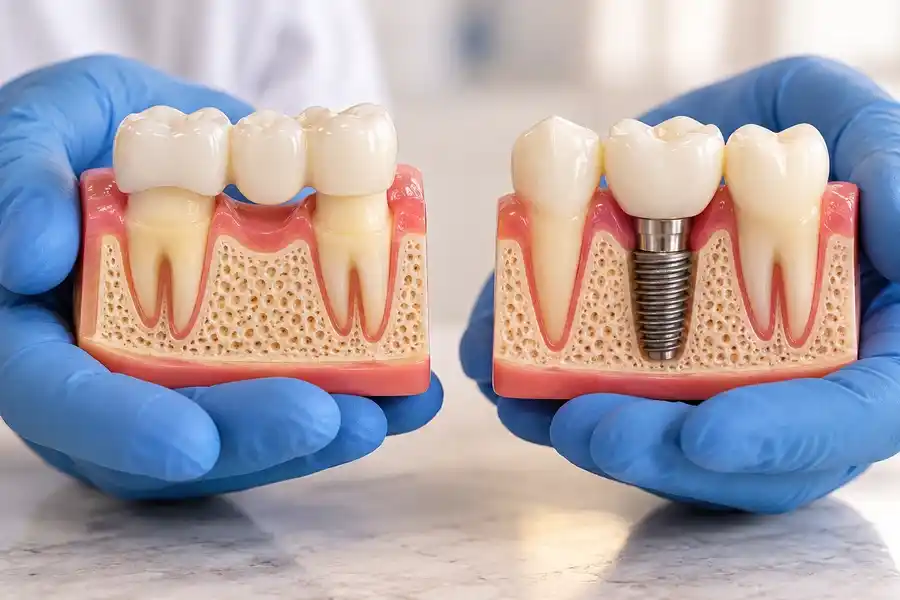
That comparison assumes a straightforward implant and a bridge supported by natural teeth. An extraction, bone graft or an existing problem with a supporting tooth changes what treatment—and recovery—will involve.
Does getting a dental bridge hurt?
Your dentist numbs the supporting teeth before reshaping them for a conventional bridge. You will hear the instruments and may feel vibration, but pain is a reason to pause and check the anaesthetic.
After the appointment, a cold drink might catch you off guard. Preparing the teeth can leave them sensitive, and the gum around the temporary bridge may feel tender. The discomfort comes from the prepared teeth and surrounding gums, rather than a surgical site.
What does dental implant pain feel like?
Once the anaesthetic wears off, the implant site can feel sore or bruised. You may notice tenderness when eating, along with swelling around the gum. Follow the pain-relief instructions your dentist gives you; the medicines must suit your health and any other medication you take.
The word “surgery” can make this sound worse than the experience reported by many patients. In a prospective study involving 234 patients and 510 implants, most patients described mild pain. The average score was highest at 24 hours—around 2 out of 10—and fell at later assessments. That is a useful indication, not a promise of how your own recovery will feel. [1]
Placing one implant in a healed gap is also different from removing several teeth and placing implants with a bone graft. Ask what your appointment includes.
The months spent waiting for the implant to bond with the bone are not months of expected pain. The area should become less sore as it heals.
Which is more painful: A dental bridge or an implant?
During recovery, a conventional bridge is usually the less uncomfortable option. It does not normally involve cutting the gum or placing anything into the jawbone.
During treatment, both procedures should be comfortable once the area is numb. The difference comes afterwards: prepared teeth can react to temperature, whereas an implant site needs to recover from surgery. Pain varies from person to person, so a single score cannot tell you how either treatment will feel.
Should I choose a bridge because it is less painful?
Not on pain alone.
Look at the teeth beside the gap. If they already have large fillings or need crowns, a conventional bridge may be a reasonable choice. If they are healthy, preparing them for a bridge means removing tooth structure that you cannot put back.
An implant leaves those neighbouring teeth unprepared. Choosing an implant does mean having surgery and allowing more time for treatment. Your bone, gum health and medical history also affect whether it is suitable.
For patients considering dental implants in Antalya, the useful question is: what would each option involve in my mouth? Ask about extractions, grafting and the condition of the supporting teeth before weighing up discomfort.
You can discuss both options with Sundent Dental Clinic and request an explanation of the treatment stages before arranging your trip to Turkey.
When should pain be checked?
Contact your dentist if pain becomes worse rather than settling, keeps you awake, or remains difficult to manage with the pain relief advised. Increasing swelling, a high temperature or discharge also needs prompt assessment.
If biting down hurts or your teeth remain sensitive after bridge treatment, arrange a check-up with your dentist. The bite or a supporting tooth may need attention; simply waiting is not always the answer.
If you are back in the UK, seek local dental care for urgent symptoms rather than waiting until you can return to Antalya. Difficulty breathing or swallowing with swelling requires emergency care.
FAQ
Can I return to work the day after bridge or implant treatment?
Usually, yes—after bridge treatment, provided you feel comfortable and have not had sedation. Many patients also return to desk work the day after a straightforward implant placed under local anaesthetic.
A physical job, several implants or additional surgery can mean you need more time off. Sedation brings separate restrictions, so agree your return-to-work plan with the dental team before the appointment. [2]
Does fitting the final crown onto a dental implant hurt?
Fitting the crown should not normally hurt and is usually much less uncomfortable than placing the implant. Your dentist attaches the replacement tooth to an implant that has already healed; this is a restorative appointment rather than another implant operation. You may feel pressure or brief tenderness around the gum as the dentist checks the fit.
References
A prospective study published in 2007 involving 234 patients and 510 implants. The study assessed implant-related pain; it did not directly compare implants with dental bridges.
Information on discomfort after implant placement, pain management and returning to work.