
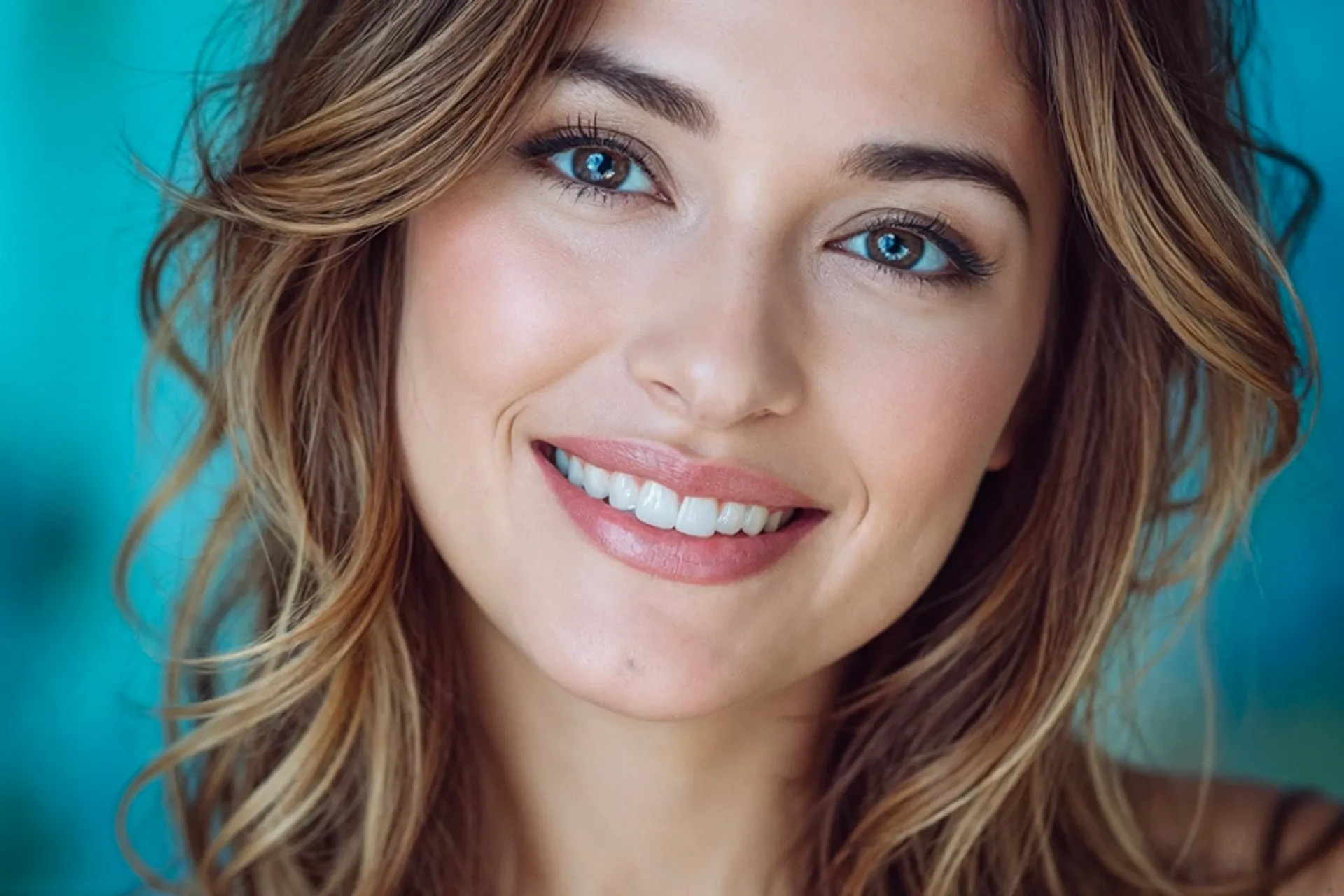
A smile is the most powerful and universal form of human communication; however, not everyone is born with a perfect set of teeth or a pearly-white smile. Genetic factors, ageing, trauma or medication taken during childhood can affect the appearance of our teeth.
Porcelain Laminate Veneers (PLV). Also known as 'porcelain veneers' or the 'Hollywood Smile', this treatment enables you to achieve your dream smile whilst preserving as much of your natural tooth structure as possible. In this article, we will examine every detail in the finest detail, from the history of porcelain veneers to the stages of application, their advantages, care tips and the reasons behind their popularity in Turkey.
Porcelain laminate veneers are tooth-coloured, extremely thin, custom-made ceramic shells that are bonded to only the front (visible) surfaces of the teeth using a specialised adhesive technique. In dentistry, this method is regarded as the pinnacle of the 'minimally invasive' approach, meaning it involves the least possible intervention on the tooth. Whilst traditional crown (cap) procedures involve reducing the entire circumference of the tooth (resulting in approximately 60–70 per cent tissue loss), veneers preserve a large portion of the tooth's healthy structure.
From Hollywood to the Clinic: A Brief History
This concept is not actually new. In the 1930s, Dr Charles Pincus began using temporary ceramic laminates to make Hollywood actors look more attractive during film shoots. However, as there was no permanent bonding (adhesion) method at that time, the procedure lasted only a few hours. In the 1980s, with the discovery of acid etching and modern resin systems, these thin veneers began to 'bond' to the tooth enamel and became a permanent treatment method.
Types of Porcelain Veneers and Material Science
Veneer's success is largely dependent on the quality of the material used. The most popular types chosen today are:
- Feldspathic Porcelain: The traditional method. It is made by stacking up layers of porcelain powder. The biggest advantage is that it exactly reproduces the light-reflective and light-transmitting (translucency) properties of natural tooth enamel. They can be made very thin (less than 0.5 mm) but are brittle on their own. Their strength comes when they are bonded to the tooth.
- Glass Ceramics (Lithium Disilicate / IPS E-max): The gold standard for aesthetics. Due to their crystalline structure, they are about 2.5 times more durable than conventional porcelain. They are very durable and look very natural.
- Zirconia Veneers – The choice for maximum durability and for patients with a history of bruxism (teeth grinding). Its light transmission is slightly lower than E-max, but its mechanical strength is very high.
- Dental Contact Lenses (Ultra-Thin/No-Prep): They are only 0.2–0.3 mm thick. They are bonded directly to the enamel, with no tooth preparation and minimum etching.
The main differences between dental veneers (laminates) and dental crowns (caps) are what part of the tooth is covered, the amount of tooth structure that is removed and the application of the crown. The main differences between these two therapies are the following:
Coverage of the Teeth: Area and Structure
- Veneers (laminates): Very thin ceramic or composite shells, usually 0.3 mm to 0.5 mm thick (sometimes 0.7 mm), bonded only to the front (visible/labial) surfaces of the teeth.
- Crowns: These are full restorations that cover the tooth all around, 360 degrees, like a 'helmet'
Preservation of Tooth Structure and Amount of Enamel Removal
- Veneers: These are regarded as a 'minimally invasive' (conservative) approach in modern dentistry. For traditional veneers, only an amount of enamel equivalent to the thickness of an eggshell or a fingernail (0.3–0.7 mm) is removed. With "no-prep" (preparation-free) techniques, however, the procedure can be carried out without touching the tooth structure at all.
- Crowns: For the procedure, approximately 60–70 per cent of the tooth's healthy structure must be ground down (reduced). Consequently, this is a much more aggressive procedure than veneers and results in significant loss of tooth structure.
Purpose and Indications
- Veneers: These are mostly chosen for cosmetic reasons. They are used to cover up stubborn discolouration on teeth, repair minor chips, close gaps between teeth (diastema) or correct minor misalignments. They require a certain amount of enamel tissue on the tooth to be successful.
- Crowns: These are used when the tooth needs functional and structural support, not just aesthetic improvement. They are a "rescue" option when there is a large percentage of the tooth that is decayed, there are extensive fillings, the tooth is structurally compromised or there is not enough tooth surface remaining to support a veneer.
Biological and Mechanical Features
- Veneers: They are far less destructive than crowns to the gums and the health of the pulp (the dental nerve) and are a healthier alternative as far as the preservation of the vitality of the tooth. They are fragile in themselves, but once bonded to the enamel they become integrated with the tooth and gain high strength.
- Crowns: The only option in cases of severe damage when the tooth must be fully protected mechanically. However, the process of reducing the tooth for the crown can increase the risk of the dental nerve being damaged, especially in younger patients.
Irreversiblility
- Crowns are completely irreversible. Once a tooth is reduced, it can never be used without a restoration for the rest of its life.
- Once the enamel has been removed, veneers are also an irreversible process. However, veneers remove much less tooth structure, so the integrity of the tooth is much better preserved than with crowns.
In Which Cases Are Porcelain Veneers Used? (Indications)
Porcelain veneers are a versatile tool used to improve the colour, shape, size and position of teeth.
- Stubborn Discolouration: They are the most effective method for masking tetracycline staining, fluorosis or age-related darkening where whitening treatments (bleaching) have failed to produce results.
- Gaps Between Teeth (Diastema): They offer a quick and aesthetic solution for patients wishing to close gaps between their teeth without braces.
- Worn, Broken and Cracked Teeth: They restore teeth that have become worn down over time or have had their tips broken off in an accident to their original form and function.
- Malformations: It corrects structural anomalies such as 'peg lateral' teeth – small, pointed lateral incisors.
- Mild Misalignment: For adults who do not wish to wait for orthodontic treatment (wearing braces for years), it creates an 'instant orthodontics' effect to correct tooth alignment.
Contraindications
Although veneers can produce miraculous results, they may not be suitable for every oral anatomy.
- Bruxism (Teeth Grinding): There is a high risk of porcelain veneers cracking or falling off in individuals who clench their teeth whilst sleeping. Treatment can only be carried out in these patients, provided they use a night guard.
- Insufficient Enamel: A healthy layer of enamel is required for the veneer to adhere to the tooth. If more than 50 per cent of the tooth has been lost or the enamel quality is poor, adhesion is reduced.
- Malocclusion: In cases where the upper and lower teeth meet edge-to-edge or cross-bite, the load placed on the porcelain veneers is excessive.
- Active Gum Disease: Gum health must be restored first; otherwise, the marginal fit of the veneers will deteriorate within a short time.
Veneer treatment is a meticulous planning process and is usually completed within 5 to 7 days.
1. Appointment: Analysis & Design (Digital Smile Design)
It begins with a dream. Your dentist will take photographs and perform intraoral scans.
- DSD (Digital Smile Design): Your ideal smile is designed on the computer.
- Mock-up (Trial): This design is tried in your mouth with a temporary material without touching your teeth. Being able to see the result at the very beginning makes both patient and dentist feel at ease.
2. Appointment: Getting Ready and Making an Impression
- Shaving: If the option of 'no-prep' is not chosen, the front surface of the tooth is shaved off by a layer of 0.3 mm to 0.7 mm (approximately the thickness of an eggshell). The procedure is usually done under anaesthetic and is painless.
- Impression – A traditional impression or a more current intraoral scanner (a digital impression) is used to make a 3D model of the teeth. Temporary veneers are fitted so you don't have sensitive teeth during this period.
3. Appointment: Laboratories and production
The laboratory technician (ceramist) mills porcelain blocks that are accurate to a millimetre with CAD/CAM technology. In this phase the colour, translucency and texture of the tooth are characterised when art and science come together.
4. Appointment: Trial and Cementation
The porcelain veneers are checked with 'try-in' pastes. If the colour and fit are right, cementation starts.
- Bonding: Hydrofluoric acid etches the porcelain inside, and phosphoric acid etches the enamel of the tooth. Then, bonding agents like "silane" are used.
- Laser Curing: Special light-curing resin adhesives are used to bond the veneers to the tooth to create a "monoblock" structure.
Pros:
- Natural Look: The light-transmitting properties make it almost impossible to tell from natural tooth enamel.
- Stain Resistant: Porcelain is smooth, non-porous and therefore more resistant to stains from coffee, tea or cigarettes than natural teeth.
- Strength: It is very strong in the mouth after bonding to the tooth.
Cons:
- Irreversibility: If the tooth has been ground down, this procedure cannot be reversed; you can no longer use that tooth without a crown.
- Difficulty in Repair: If a large piece breaks off, it is usually impossible to repair, and the crown must be replaced.
- Sensitivity: Sensitivity to hot and cold may be experienced for a few days following the procedure.
In recent years, the term 'Turkey teeth' has become popular on social media. Turkey has become one of the most sought-after destinations for dental tourism worldwide. The main reasons for this are:
- Cost: Prices are 70–75 per cent lower than in Europe and the United States.
- Technology: Many clinics in Antalya and Istanbul are equipped with the latest CAD/CAM and digital design technologies.
- Speed and Experience: Thanks to their high caseloads, Turkish dentists have extensive experience in aesthetic smile design, and treatments are usually completed within a week.
The lifespan and aesthetic appearance of porcelain dental veneers (porcelain laminates) depend directly on the quality of post-treatment care and the patient's lifestyle habits. The key points to bear in mind to ensure the success of the restorations are as follows:
An Intensive Oral Hygiene Routine
Although veneers are resistant to decay, the health of the gums around the veneers and the underlying natural tooth structure are important for the longevity of the restoration.
- Brush Your Teeth Often: Brush your teeth at least twice a day with a soft-bristled toothbrush.
- Choosing The Right Toothpaste – Use only non-abrasive toothpaste with fluoride to avoid damaging the porcelain surface.
- Flossing: Floss is to be used gently every day to prevent the build-up of bacterial plaque along the edges (margins) of the veneers and to prevent secondary decay.
- Mouthwash: Use a fluoride mouthwash at least once a day to strengthen the surrounding dental tissue.
Adjusting Eating Habits
Although veneers become highly durable once bonded to the tooth, they may crack or fall out under excessive mechanical stress.
- Avoiding Hard Objects: Chewing ice, biting your nails, chewing on a pen or using your teeth as a 'tool' (such as to open a packet) can cause serious damage to the porcelain.
- Biting Habits: Instead of biting into foods such as apples, hard bread or nuts with your front teeth, cutting them into small pieces and chewing them with your back teeth will extend the life of your veneers.
- Stain Control: Although porcelain does not stain, the adhesive (cement) line at the edges of the veneers may discolour over time. For this reason, consumption of staining substances such as coffee, red wine and cigarettes should be limited, and the mouth should be rinsed with water after consumption.
Proactive Action
- Night Guard Use: Bruxers (people who grind or clench their teeth) need to wear a custom-made night guard to protect their porcelain veneers from too much stress and breakage.
- Sports Mouthguards: Wear mouthguards to protect teeth from trauma during physical activity and sport.
Professional Follow-up and Medical Examinations
- Six Monthly Appointments You must visit the dentist regularly every 6 months. During these check-ups, the dentist can identify any problems early on by checking the condition of the veneer edges, how well they fit against the gums, and if there are any possible leaks.
- Professional Cleaning: The professional polishing done by the dentist helps to maintain the original shine of the veneers.
Warning Signs
If you see any cracking, chipping or looseness of your veneers, or dark lines where the veneer meets the gum, or if you experience pain or sensitivity when biting down, you should see your dentist straight away. If a veneer comes loose, keep the piece safe and call your dentist immediately.
Am I a good candidate for porcelain laminate veneers?
Porcelain laminate veneers are an investment that can change your life if the right cases are chosen and the work is done with painstaking care. It's not all about looks; it's about having a healthy, functional smile too. A visit to a specialist dentist can tell you if this porcelain miracle is the right one for you. Your smile is the most beautiful message you send to the world. Take good care of it!
Will I feel any pain during the procedure?
No, thanks to local anaesthetic, the procedure is pain-free.
Are veneers permanent?
Yes, if the tooth has been ground down, it is an irreversible procedure and requires a lifetime of restoration.
How long do porcelain veneers last?
With good care, they can last an average of 10–15 years and sometimes over 20 years.
Do veneers stain?
Porcelain surfaces are more resistant to staining than natural tooth enamel.
Can veneers be fitted without grinding the teeth?
Yes, if the teeth are in the correct position, a 'no-prep' method can be used.
Are veneers or crowns better?
If your tooth is healthy, a veneer is preferable; if there is significant decay or tooth structure loss, a crown is more suitable.
Can I chew gum after having veneers fitted?
Yes, but avoiding very hard or sticky foods will help prolong their lifespan.
Can veneers be whitened?
No, their colour cannot be changed once they have been fitted; therefore, the colour must be chosen correctly from the outset.
Do I have to wear a night guard?
If you have a habit of clenching your teeth, then yes, for protection.
How will I know if my veneers have come loose?
You may feel a gap when you run your tongue over your teeth, or a piece may fall out; in this case, you should contact your dentist immediately.
Will my veneers cause bad breath after they've been fitted?
No, they won't cause bad breath provided the margins fit well and you maintain good oral hygiene.
Can I bite into hard fruits like apples?
Porcelain veneers are strong, but it is safer to cut very hard foods into pieces before eating them.
How should I choose the colour of my veneers?
Your dentist will use professional colour charts to match your skin tone, eye colour and age.
Composite veneers or porcelain?
Porcelain is more aesthetic, durable and long-lasting; composite is more economical.
Will I be without teeth during the treatment?
No, you will have comfortable temporary teeth throughout the laboratory process.
What is an E-max veneer?
It is a type of porcelain based on lithium disilicate, which is both highly aesthetic and very durable.
Does smoking damage veneers?
It does not stain the porcelain, but it may cause discolouration along the bonding line over time.
Can veneers be used to replace missing teeth?
No, veneers are only applied to existing teeth; implants or bridges are required for missing teeth.