A smile is not just a movement of the face; it is the most external manifestation of self-confidence, social acceptance, and personal happiness. Unfortunately, many of us don't have the perfect alignment of teeth we dream of due to genetic factors, ageing, trauma or medications used in childhood. Today, dentistry has a solution for these aesthetic problems and to start changing them while preserving the dental tissue at the highest level: laminated dental veneers, also called 'leaf porcelains'.
"Minimal Intervention" Philosophy: Porcelain laminate veneers are very thin shells of ceramic that are tooth-coloured and custom-made and are bonded to the front surfaces of teeth (the surfaces you see) using a special bonding technology. The primary difference between this application and traditional veneer methods is the amount of tooth preservation. With classic crowns, about 60-70% of the tooth's total circumference is removed. With veneers, this percentage is much lower since only the front surface of the tooth is abraded by the thickness of a fingernail or eggshell (average 0.3 - 0.7 mm).
Sometimes you can even do 'no-prep' (unprepared) methods where no tissue is removed from the tooth, if the alignment and structure of the teeth are suitable. This technique is considered the peak of "minimally invasive" dentistry — meaning it causes the least amount of damage to healthy tissue.
Laminate dental veneers (porcelain veneers) are categorised into various types depending on the material used, the manufacturing method and the amount of enamel removal required.
Types of Veneers According to the Material Used
- IPS E-max (Lithium Disilicate): Considered the gold standard in modern aesthetic dentistry, this glass-ceramic perfectly mimics natural tooth enamel thanks to its superior light transmittance. Thanks to its crystal structure, it is approximately 2.5 times more durable than traditional porcelains and resistant to breakage.
- Feldspathic Porcelain: A traditional method produced by processing porcelain powder in layers. It is preferred in cases with very high aesthetic expectations due to its ability to be produced very thinly and to provide results closest to the optical properties (fluorescence) of natural teeth.
- Zirconia Veneers: They are used especially in cases requiring very high durability or in patients with a history of teeth grinding (bruxism). Although it has the highest mechanical resistance, its light translucency is lower than that of E-max.
- Celtra Duo: It is a next-generation material containing lithium silicate reinforced with zirconium; it is both resistant to high chewing forces and successfully mimics the appearance of natural enamel.
- Composite Veneers: They are made from resin-based polymer materials. It is a more economical alternative to porcelain, but it has a higher risk of discolouration and wear over time.
Types by Method of Application
- Direct Veneers (Bonding): Restorations that are completed in one appointment by the dentist in a clinical environment. Composite material is placed and contoured directly to the surface of the tooth. It's fast and cheap.
- Indirect veneers: These are restorations made in the dental laboratory or with the use of CAD/CAM (computer-aided design and manufacturing) devices in the clinic after measurements are taken from the tooth. These are made of porcelain or laboratory composites and are bonded to the tooth enamel with special adhesives.
Types according to the quantity of preparation (enamel reduction)
- Traditional Veneers: These are models that require the reduction of about 0.5 mm to 0.7 mm of enamel to make room for the porcelain and to prevent a bulky appearance.
- Ultra-Thin / No-Prep Veneers (Dental Contact Lens): These restorations are made with a thickness of only 0.2 mm to 0.3 mm (approximately the thickness of a fingernail). They can be applied directly on the enamel (without abrasion or with minimal roughening) provided the tooth structure is suitable.
Variations Based on Preparation Design
Depending on the extent to which the incisal edge of the tooth is covered, three different designs can be applied:
- Window: Only the anterior surface of the tooth is prepared; the incisal edge is preserved; this is the most conservative approach.
- Bevel: A preparation in which a slight bevel of 0.5–1 mm is created on the incisal edge.
- Overlap: The incisal edge is extended by 2–4 mm towards the palatal (back) surface so that the porcelain also engages the tooth from behind; this increases retention and strength.
- Laminate veneers are a versatile aesthetic tool used to improve the colour, shape, size and position of teeth. The most common applications are as follows:
- Discolouration Not Responding to Whitening: This is the most effective solution where teeth-whitening (bleaching) methods prove insufficient, particularly in cases of tetracycline-induced staining, excessive fluoride intake (fluorosis) or severe age-related discolouration.
- Gaps Between Teeth (Diastema): For individuals with unsightly gaps between their teeth, these gaps can be closed using veneers without the need for orthodontic (braces) treatment.
- Worn, Broken and Cracked Teeth: Veneers restore teeth that have become worn down over time, have had their tips broken off in an accident, or have been eroded by acidic foods to their original shape.
- Shape and Size Anomalies: Some teeth may be genetically smaller than normal (microdontia) or pointed (peg-lateral). Veneers restore these teeth to their normal size, ensuring a harmonious smile.
- Minor Crowding and Misalignment: For adults who do not wish to wait for orthodontic treatment (wearing braces for years), veneers may be chosen to create an 'instant orthodontics' effect to correct tooth alignment.
The success of the veneers depends on the quality of the material used and on the skill of the dentist. The main materials used in modern technology are:
- E-max (Lithium Disilicate): It is today the "gold standard" of aesthetics. The light permeability and transparency are completely similar to natural tooth enamel. It also is about 2.5 times stronger than traditional porcelains because of its crystal structure.
- Zirconia Veneers: The option of choice when maximum durability is necessary. They show a high resistance, especially in restorations extending towards the back teeth or in case of teeth grinding (bruxism). However, it is a little less translucent in the light than E-max.
- Feldspathic Porcelain: It is a traditional and very aesthetic technique. It is made by layering and has the closest fluorescence characteristic to that of a natural tooth. It can be made very thin (less than 0.3 mm) but is quite fragile before bonding.
- Composite Veneers: These are veneers made of a resin material that the dentist shapes directly in the mouth. It is a more economical option and is usually completed in one session. But they are not as durable as porcelain and may get stained or worn down over time.
A successful veneer treatment is usually completed in between 3 and 5 appointments, over the course of an average of one week.
Stage 1: Analysis and Design (Smile Design)
The first appointment is the most critical stage. Your dentist will take photographs, listen to your expectations and create a design suited to your facial features.
- Digital Smile Design (DSD): Your ideal smile is planned in advance using computer software.
- Mock-up (Trial): Without any work being done on your teeth, the design is tested in your mouth using a temporary material. Seeing the result right at the start of the process helps to alleviate the patient's concerns.
Stage 2: Preparation and Measurement
Once the design has been approved, space is created on the front surfaces of the teeth for the porcelain.
- Preparation: A layer of between 0.3 and 0.7 mm is typically removed. As this procedure is carried out under local anaesthetic, it is painless.
- Digital Impression: Instead of traditional impression trays, advanced intraoral scanners are used to create a 3D model of the teeth. Temporary veneers are fitted during this time to prevent the teeth from becoming sensitive.
Stage 3: Try-in and Bonding (Cementation)
The porcelain restorations received from the laboratory are first checked using 'try-in' pastes. If the colour and fit are flawless, the procedure proceeds to the permanent bonding stage.
- Bonding: The inner surface of the porcelain is etched with hydrofluoric acid, whilst the tooth enamel is etched with phosphoric acid, creating a chemical 'monoblock' structure.
- Light Curing: Special resin adhesives are cured using a laser or light source, causing the veneers to bond seamlessly with the tooth.
With appropriate case selection and meticulous oral hygiene, veneers can remain in the mouth successfully for 10–15 years and, in many cases, even up to 20–25 years. Clinical studies show that the 10-year success rate for porcelain veneers is around 91–94 per cent.
Oral Hygiene: Brushing twice a day with a soft-bristled toothbrush and regular flossing are essential. Porcelain does not decay, but your natural tooth underneath may.
Night Guard: If you have a habit of clenching your teeth, you must use a protective night guard to prevent the porcelain from cracking.
Avoiding Bad Habits: Biting pens, biting your nails or cracking hard-shelled foods with your front teeth can damage the porcelain.
Regular Check-ups: Professional check-ups every six months ensure that any potential leaks or gum recession are detected early.
Turkey has become a global hub for dental tourism, particularly through cities such as Antalya and Istanbul.
- Cost Advantage: It is possible to save up to 70–75 per cent compared to prices in the UK or the US. The cost of a single veneer in Turkey averages between £100 and £250.
- Speed and Technology: Thanks to the clinics' in-house CAD/CAM laboratories, the entire process is completed within 5–7 days.
- Package Services: Many clinics simplify the process for patients by offering all-inclusive packages that include VIP transfers, accommodation and treatment planning.
Antalya has become a global centre of attraction thanks to its unique blend of modern dentistry and the holiday experience, as well as the high-quality services it offers. The expertise and warmth specific to Sundent, combined with the financial benefits and holiday opportunities offered by Antalya, make the region an ideal destination for dental treatment.
Team of Specialist Dentists and a Personalised Approach
The most important factor in choosing Antalya is its team of specialist dentists with international experience. Sundent employs a number of highly experienced dentists. The clinic's core philosophy is to provide personalised treatment solutions by approaching each patient with care, attention and a commitment to ethical standards. Patient reviews highlight how the dentists explain procedures in detail, their 'gentle touch' and, in particular, the patient approach they demonstrate towards those with a fear of the dentist.
Modern Technology and Hygiene Standards
Sundent utilises modern technology and up-to-date treatment methods to safeguard oral and dental health. The clinic is described by patients as 'spotlessly clean', and these high standards of hygiene serve as a reassuring factor for patients visiting from abroad. The latest digital systems are utilised for treatments requiring precision, such as cosmetic dentistry, smile design, porcelain veneers and zirconia crowns.
Antalya's Cost and Speed Advantage
Clinics in Antalya offer savings of up to 70–75 per cent compared to prices in Europe and America, thanks to lower operational costs and government support for medical tourism. Looking specifically at Sundent, patients confirm that prices are very reasonable and affordable compared to the wider Antalya area and that cost-effective solutions are provided without compromising on quality. Furthermore, treatments such as veneers, which could take weeks using traditional methods, can be completed in as little as 5–7 days thanks to the digital infrastructure.
The 'Dental Holiday' Experience
What makes Antalya unique is the opportunity to combine dental treatment with a holiday on the Mediterranean coast. Patients can enjoy Antalya's natural and historical beauty during the few days it takes for their porcelain restorations to be prepared in the laboratory. Clinics in the region generally offer comprehensive services, including airport transfers and accommodation, making the process hassle-free for patients.
A Wide Range of Treatments
Sundent does not limit itself to cosmetic procedures; it provides services across a wide range of areas, including implants, paediatric dentistry, root canal treatment and surgical procedures. This enables patients to have all their oral health needs addressed at a single centre by a professional team.
Will I feel any pain during the procedure?
No, thanks to local anaesthesia, the procedure is completely pain-free.
Are veneers a permanent solution?
Yes, once tooth enamel has been removed, the procedure is irreversible and requires lifelong maintenance.
Can veneers be whitened?
No, porcelain surfaces do not react to whitening agents; the shade must be chosen correctly from the outset.
Do veneers stain?
Porcelain has a non-porous structure and is much more resistant to staining from factors such as coffee, tea or smoking than natural teeth.
How much damage is done to my own tooth?
Only 0.3–0.7 mm of tooth structure is removed from the front surface of the tooth – roughly the thickness of an eggshell.
Which is better: veneers or crowns?
If your tooth is structurally sound, a veneer is preferable; if there is significant decay or loss of tooth structure, a crown is more suitable.
Do I have to wear a night guard?
If you clench your teeth whilst sleeping, it is strongly recommended that you wear one to extend the lifespan of your porcelain veneers.
Composite veneers or porcelain veneers?
Porcelain is more aesthetic, durable and stain-resistant; composite, on the other hand, is quicker and more economical.
How do I know if my veneers have come loose?
If you feel a gap when you run your tongue over your teeth, or if a piece falls out into your hand, you should contact your dentist immediately.
Do veneers cause bad breath after they've been fitted?
No, veneers do not cause bad breath provided they fit well against the gums and you maintain good oral hygiene.
How many teeth does a full set of veneers cover?
Packages covering 16 or 20 teeth along the smile line are generally preferred.
How is the colour of the veneers chosen?
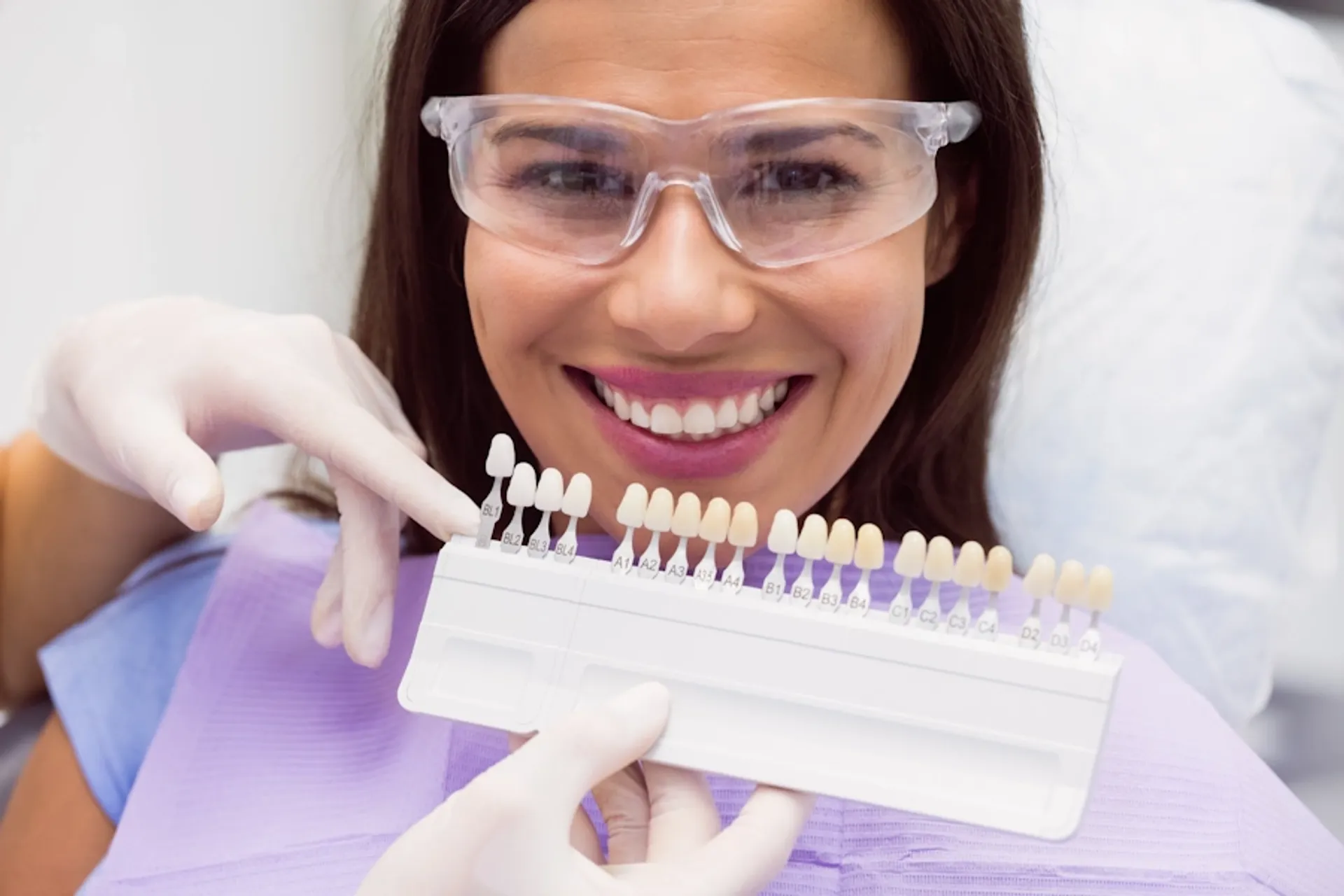
Your dentist will select the most natural shade using a professional colour chart tailored to your skin tone, eye colour and age.
Will I be without teeth during treatment?
No, comfortable temporary teeth will be fitted whilst your porcelain veneers are being prepared.
Can veneers be fitted to replace missing teeth?
No, veneers are only fitted onto existing teeth; implants or bridges are required for missing teeth.
How many years do veneers last before they need replacing?
On average, they may need replacing after 10–15 years due to gum recession or discolouration at the margins.
Does smoking damage veneers?
The porcelain itself does not stain, but discolouration may occur over time along the bonding line.
Is there an age limit for veneers?
Anyone whose jaw development is complete (generally aged 18–20 or older) and who has sufficient enamel is suitable.